August 8, 2019

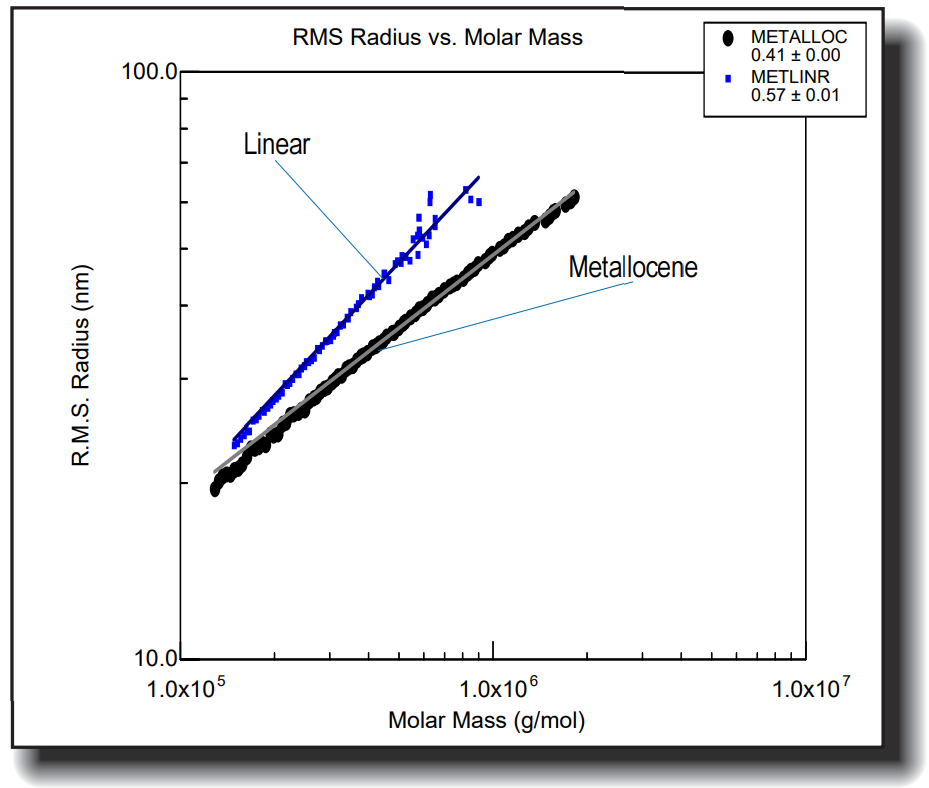
High Temperature Branching Analysis of Metallocene Catalysts for Polyethylenes

In order to characterize polyolefins by liquid chromatography, a high temperature chromatograph must be used in order to solubilize the polymer. Temperatures typically range from 135°-145°C, and the solvent of choice is trichlorobenzene (TCB). With conditions this aggressive, the choice of detectors is critical. In this application note we show the power of results obtained from a High Temperature miniDAWN (HTmD) for a metallocene catalyst.

August 8, 2019

AN1006: Polyurethane – absolute molar mass by SEC-MALS

Polyurethane is a common polymer which is sometimes difficult to analyze. Typically, polyurethanes are analyzed by Gel Permeation Chromatography (GPC) using polymer standards and extensive column calibration. But, besides being tedious, column calibration means that the resulting answers will be relative and not absolute. A far more effective means of characterizing polyurethanes involves adding a DAWN or miniDAWN detector to your GPC. Learn more in our application note.

August 8, 2019

Branching Analysis of PMMA

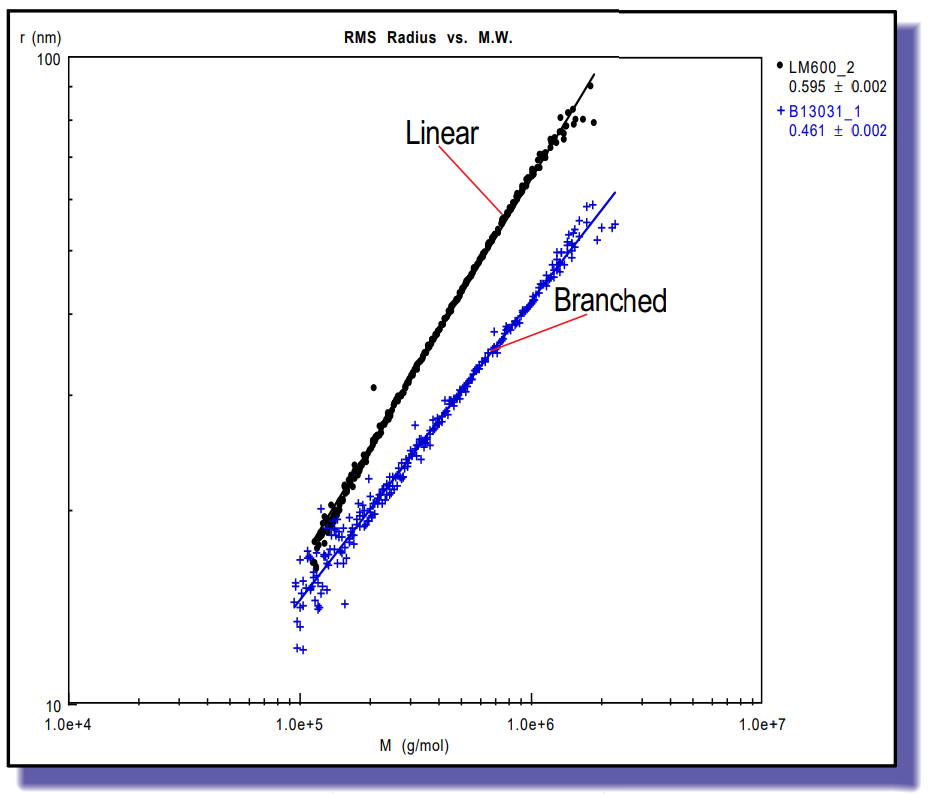
The degree of branching and its distribution in a polymer affects its physical and chemical properties. Characterization with a DAWN or miniDAWN coupled to a chromatograph provides the only direct method of determining the branching ratio, gM, and, from a knowledge of the branching functionality, the branching frequency as a function of molecular weight. Other techniques are indirect at best, and are based on numerous assumptions.

August 8, 2019

Nylon Analyzed in Chloroform

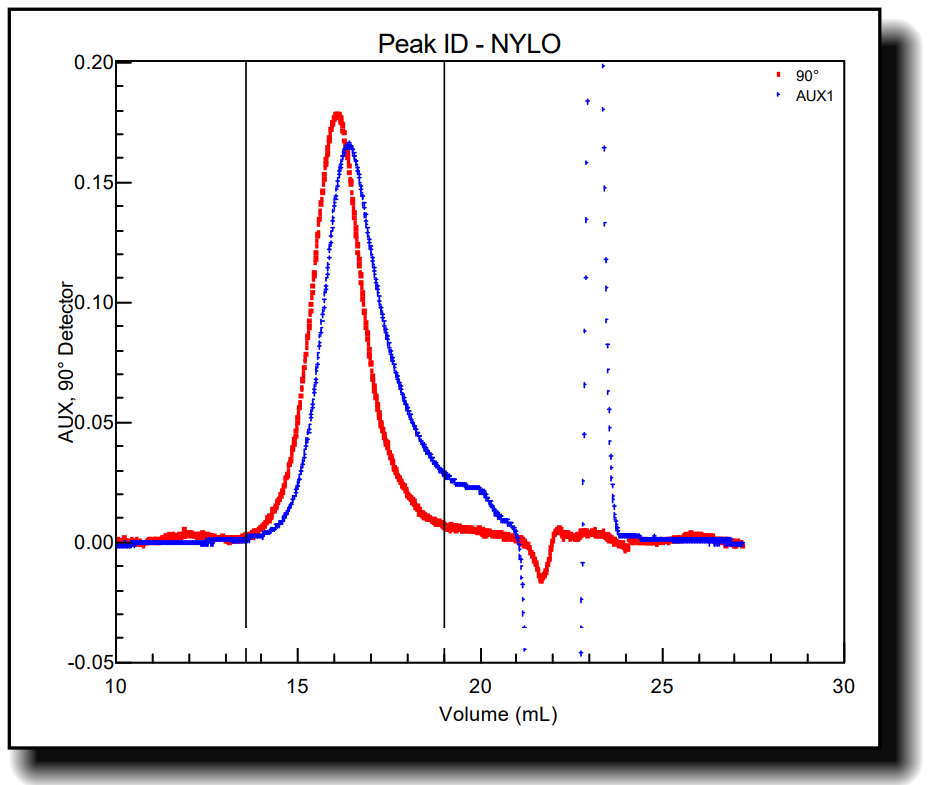
Nylon refers broadly any of a number of strong elastic synthetic polyamide materials that can be fashioned into fibers, filaments, bristles or sheets. To create nylon, it is frequently analyzed by Gel Permeation Chromatography (GPC) using polymer standards and extensive column calibration. Using Wyatt Technology’s exclusive multi-angle light scattering technology, you can eliminate column calibration and characterize nylon more completely than ever before. Learn more in our application note.

August 8, 2019

Branching Analysis of Synthetic Rubbers: Polybutadiene and a Butadiene-Styrene Copolymer

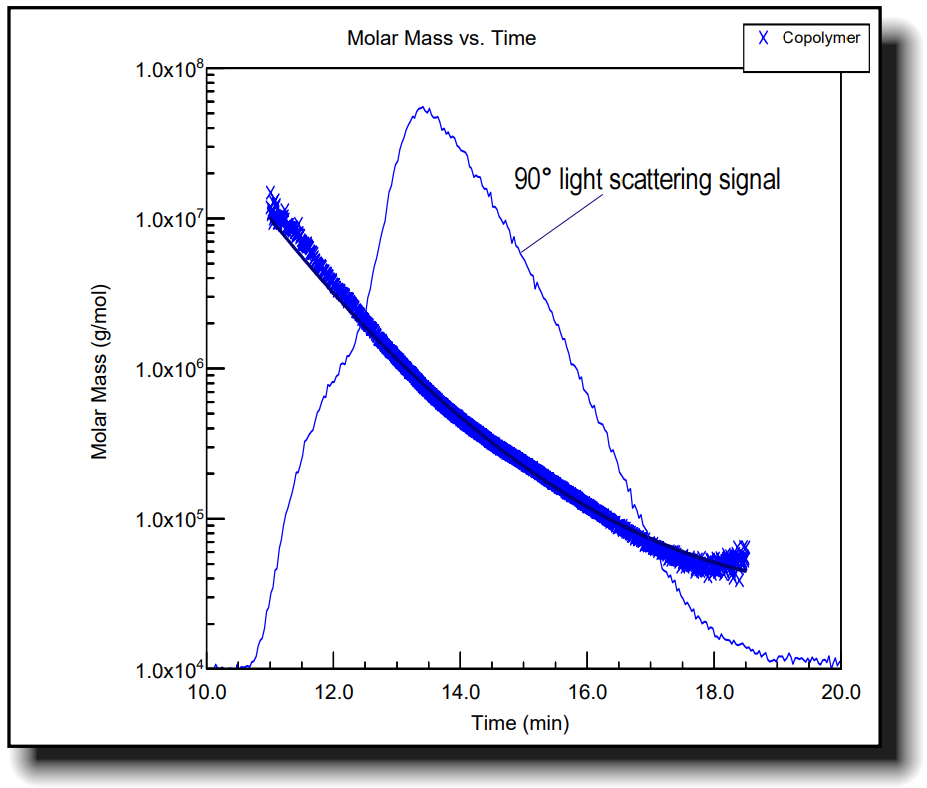
Typically, polystyrene standards are used to estimate the molar masses of synthetic rubbers in SEC experiments, but by using a DAWN or miniDAWN multi-angle light scattering (MALS) detector, standards and column calibration are no longer needed. Learn more in our application note.

August 8, 2019

Coil-Stretch Transition of High Molar Mass Polymers

Abnormal elution behavior of high molar mass polymers, such as flow rate dependence of relative peak retention time, coelution of different molar mass polymers, and the appearance of double peaks at high flow rates, have been reported. By coupling HDC with a DAWN detector, such abnormal elution behavior is explained in terms of a chromatographic mode transition from HDC to slalom chromatography (SC).

August 8, 2019

Rigid-Rod Type Polymers: Poly(n-Hexylisocyanate)

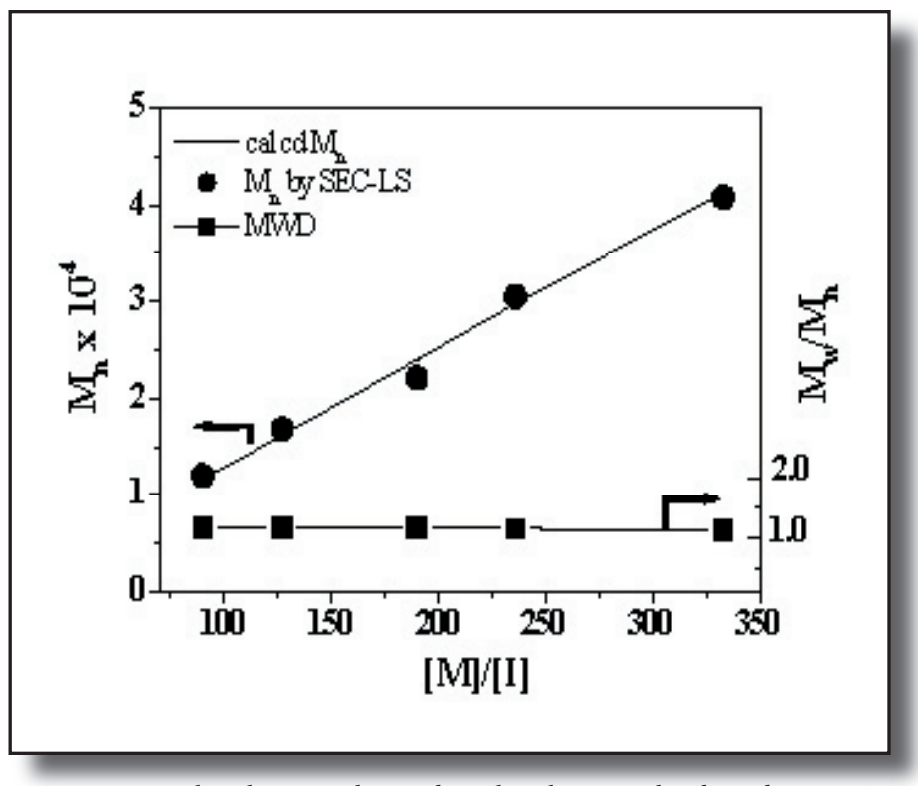
Polyisocyanates are of considerable interest due to their applications in various fields such as optical switches, liquid crystals, degradable materials, composites, and chiral recognition. For many of these applications it is desirable that the molecular weight (MW) and the molecular weight distribution (MWD) of the polymers are controlled and defined. In this application note, the polymers were characterized by SEC-LS, which furnished reliable and absolute MW data.

August 8, 2019

Polystyrene Nanocomposites after Melt Intercalation

Melt intercalation exposes polymers to thermal and shear histories that can induce degradation. An extruded macrocomposite comprising polystyrene and montmorillonite was statically annealed in an O2-rich environment at 250°C to induce localized chain scission. Read more in our application note.